


Page 43 - 2021_06-Haematologica-web
P. 43
Monocytic switch in pediatric BCP-ALL subtypes
patient with monocytic switch was treated according to standard BCP-ALL frontline protocols. In the whole study cohort, eight of 80 patients with monocytic switch relapsed. Of the eight relapsed patients, six patients relapsed with an identical BCP-ALL subtype to the subtype at diagnosis (two had the BCR-ABL1 subtype, one had the DUX4r subtype, one had the HHD subtype, one had the
A
ZNF384r subtype, and one had the B-other rest subtype). Interestingly, only one of those patients (ZNF384r) devel- oped monocytic switch during induction therapy for relapse. Two patients (one with the DUX4r subtype and one with the KMT2Ar subtype) relapsed with monocytic AML. In all three patients with the presence of monocytoid blasts at relapse, we proved IG/TR rearrangements in the
B
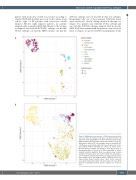
Figure 2. Multidimensional analysis of RNA sequencing and flow cytometry data. (A) Overview of the gene expression found for all patient (n=197) using UMAP as the dimensionality reduction algo- rithm for RNA sequencing data. Only the genes with the most vari- ability (genes with an SD 0.4-fold higher than the maximum SD, n=271) were used. Patients with switch are shown as full circles, and patients without switching are shown as empty circles. Relevant genetic subtypes are shown in color. (B) Overview of immunophenotypes of all cases (n=745) using UMAP as dimen- sionality reduction algorithm. Blasts were gated using common backbone (forward scatter, side scatter, CD45). The data (expres- sion of markers on blast population in percentage) were prepared from multiple tubes and merged together. Missing values were replaced with marker median values. Open circles represent cases without monocytic switch, full circles represent cases which developed switching. Relevant genetic subtypes are shown in color.
haematologica | 2021; 106(8)
2071


