


Page 259 - 2021_06-Haematologica-web
P. 259
CASE REPORTS
Non-inhibitory antibodies inducing increased emicizumab clearance in a severe hemophilia A inhibitor patient
Hemophilia A is a bleeding disorder that results from coagulation factor VIII (FVIII) deficiency, which can be treated via substitution therapy using FVIII concentrates. However, the generation of neutralizing antibodies ren- ders treatment ineffective in up to 30% of the severe patients.1,2 Emicizumab is a humanized bispecific anti- body that binds simultaneously to activated factor IX (FIXa) and factor X (FX), thereby mimicking the cofactor function of activated factor VIII (FVIIIa), even in the pres- ence of FVIII inhibitors.3,4 Once-weekly subcutaneous administration of emicizumab markedly decreased the bleeding rate in patients who had hemophilia A with or without FVIII inhibitors.5-8 However, anti-drug antibodies with neutralizing potential can develop in a small num- ber of patients and have been associated with decreased emicizumab plasma concentrations and loss of effica- cy.9,10 Although the development of neutralizing anti- emicizumab antibodies is rare and routinely biological monitoring is not recommended in patients treated with emicizumab, it is still important to detect the presence of such antibodies in case of bleeding events. In this study, we describe the development of non-inhibitory anti-emi- cizumab antibodies that selectively provoke increased emicizumab clearance in a severe hemophilia A patient with inhibitors.
A 2-year-old boy with severe hemophilia A developed an anti-FVIII inhibitor (1 BU/mL) at 19 exposure days. The patient failed to respond to immune tolerance induc- tion and venous access became extremely complicated.
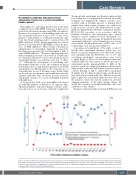
Treatment with emicizumab was therefore initiated with four loading doses (3 mg/kg/week) followed by weekly treatment (1.5 mg/kg/week). Clinical outcomes were excellent with no bleeding episodes or bruising. Blood samples were taken as part of routine care, with excess being stored for research (The Hôpital Necker’s hemo- philia bio-library/Necker Biobank, registration number: DC-2009-955; procedure is in accordance with the Helsinki declaration and participants gave written informed consent). Analysis revealed emicizumab con- centrations in the expected range (66 mg/mL 52 days after emicizumab initiation),5 and a dramatic decrease in acti- vated partial thromboplastin time (APTT) ratio (0.74, normal range <1.2) was measured (Figure 1).
A spontaneous hemarthrosis of the ankle occurred 6 months after emicizumab initiation, which was con- firmed via clinical examination and ultrasound evalua- tion. Simultaneously, the APTT-ratio rose to 2.67, and circulating emicizumab concentrations were below 1 mg/mL (Figure 1). Hence, the development of anti-emi- cizumab antibodies was suspected, and the presence of emicizumab-specific immunoglobulin G (IgG) in the patient’s serum was analyzed in immunosorbent assays, using normal serum and IgG-depleted patient serum as controls. Binding of IgG to immobilized emicizumab (5 mg/mL) was determined using isotype-specific peroxi- dase-labeled monoclonal antibodies. Whereas no specific IgG2 or IgG3 anti-emicizumab antibodies were detected, the patient’s serum was indeed enriched in anti-emi- cizumab antibodies of the IgG1 subtype (Figure 2A and B). We could not test for IgG4 antibodies, since emi- cizumab is of this subtype.3
Treatment of the hemarthrosis included rFVIIa and oral
haematologica | 2021; 106(8)
2287
Figure 1. Evolution of APTT and emicizumab plasma concentration over time. At indicated time points, blood samples were taken from the patient. Plasma was then analyzed for APTT (left Y-axis, blue circles) and emicizumab concentration (right Y-axis; red circles). Arrow 1 indicates bleeding event; arrows 2-3 indicate periods of cortico-therapy (2: 1 mg/kg/day for 48 hours during day 187-189; 3: 2 mg/kg/day during 3 weeks during days 194-214, with progressive decrease in dosing). ATPP: activated partial thromboplastin time.


