


Page 138 - 2021_06-Haematologica-web
P. 138
H. Al-Samkari et al.
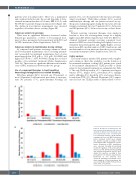
patients were iron infusion-free. There was a maintained and continued reduction into the second 6 months of beva- cizumab treatment (median of 0.0 units, IQR 0.0-3.0), with 84/138 (61%) patients being iron infusion-free (Figure 1D). The decline in iron infusion requirements was observed regardless of baseline disease severity (Figure 2B).
Subgroup analysis by genotype
There were no significant differences between baseline hematologic parameters or effect of bevacizumab treat- ment on these parameters between patients with ENG and ACVRL1 mutations (Online Supplementary Table S3).
Subgroup analysis by maintenance dosing strategy
As compared with patients receiving continuous sched- uled bevacizumab maintenance, those receiving intermit- tent (as-needed) bevacizumab maintenance had a lower mean hemoglobin (10.8 g/dL vs. 12.3 g/dL; P=0.0002) and higher ESS (4.96 vs. 2.88; P<0.0001) during the second 6 months of bevacizumab treatment (Online Supplementary Table S4). There were no significant differences in iron infu- sions or RBC transfusions between the two groups.
Use of concurrent therapies to treat hereditary hemorrhagic telengiectasia-associated bleeding
Fifty-three patients (22%) received one (39 patients) or more (14 patients) local hemostatic procedures to treat epis- taxis (41 patients, 17%), gastrointestinal bleeding (12
A
patients, 5%), or both (1 patient) in the first year after initi- ating bevacizumab. Thirty-three patients (14%) received antifibrinolytic therapy and one patient received an ery- thropoiesis-stimulating agent during the first year after ini- tiating bevacizumab. In total, 73 patients (31%) did receive and 165 patients (69%) did not receive any of these thera- pies.
Patients receiving concurrent therapies were similar at baseline to those not receiving them, except for a slightly higher mean ESS (Online Supplementary Table S5). On beva- cizumab treatment, patients receiving concurrent treat- ments for HHT-associated bleeding had slightly lower on- treatment mean hemoglobin and slightly higher on-treat- ment mean ESS, median number of RBC transfusions, and median number of iron infusions than those not receiving concurrent treatments (Online Supplementary Table S5).
Safety analysis
The safety analysis included 232 patients with complete and continuous chart data available over the duration of bevacizumab treatment, totaling 340.1 patient-years at risk of bevacizumab administration. TEAE possibly or likely related to bevacizumab treatment are summarized in Table 3. The only TEAE reported in >1% of patients were hyper- tension (18%), fatigue (10%), proteinuria (9%), myalgia and/or arthralgia (6%), headache (4%), and venous throm- boembolism (VTE, 2%). Overall, 88 patients (38%) experi- enced at least one TEAE possibly or likely related to beva-
B
Figure 2. Red blood cell transfusions and iron infusions pretreatment and on-beva- cizumab treatment by hematologic sup- port requirements in the 6 months prior to bevacizumab initiation. (A) All patients requiring red blood cell (RBC) transfusion before treatment (n=137) were divided into quartiles (Q1-Q4) according to their pretreatment RBC transfusion require- ments. Reductions in RBC transfusions were observed following bevacizumab treatment regardless of the pretreatment disease severity. (B) All patients requiring iron infusion pretreatment (n=155) were divided into quartiles according to their pretreatment iron infusion requirements. Reductions in iron infusions were observed following bevacizumab treat- ment regardless of the pretreatment dis- ease severity. Mo: months; PreTx, pretreat- ment; OnTx, on treatment.
2166
haematologica | 2021; 106(8)


