


Page 240 - 2021_06-Haematologica-web
P. 240
Letters to the Editor
A
B
C
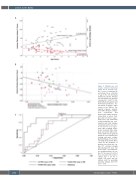
Figure 1. Pituitary iron and volume, relation to hormonal status and to systemic iron. (A) Z scores of pituitary R2 and volume (V) as a function of age in the 53 chronically transfused patients. Pituitary iron and volume are inversely correlated (r= -0.36; P<0.02). (B) Distribution by gender and hormonal/reproductive sta- tus (based on groups I and II shown in the Tables). The majority of group I patients (men with adequate endoge- nous testosterone and women with regular periods, represented as green trian- gles and red circles, respec- tively) have only moderately elevated pituitary iron accu- mulation and small changes in pituitary volume; Z scores 0 to 5.0 and 0 to -3.0, respec- tively. Men requiring testos- terone treatment (blue trian- gles) and women with amen- orrhea (pink circles) (group II) had more severe pituitary iron loading and more notable gland shrinkage. (C) Receiver- operating characteristic (ROC) curves for the prediction of pituitary iron show that car- diac T2* correlates strongly with pituitary iron. Liver iron and ferritin concentrations are weakly predictive, the car- diac T2* is superior to both of these measures. The point of cardiac T2* = 20 ms is shown. This value was the optimal cutoff for predicting abnormal pituitary iron; ROC area = 0.93.
1742
haematologica | 2021; 106(6)


