


Page 57 - Haematologica Vol. 110 - January 2025
P. 57
ARTICLE - IVIG prophylaxis in pediatric ALL Results
Patients’ characteristics
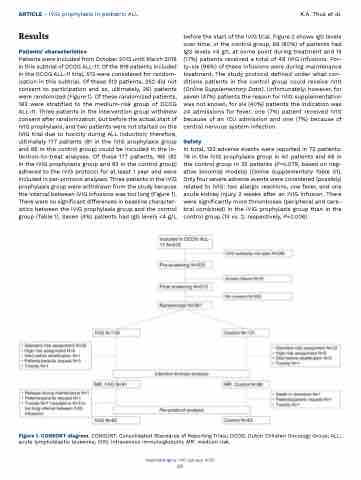
Patients were included from October 2012 until March 2019 in this subtrial of DCOG ALL-11. Of the 819 patients included in the DCOG ALL-11 trial, 513 were considered for random- ization in this subtrial. Of these 513 patients, 252 did not consent to participation and so, ultimately, 261 patients were randomized (Figure 1). Of these randomized patients, 182 were stratified to the medium-risk group of DCOG ALL-11. Three patients in the intervention group withdrew consent after randomization, but before the actual start of IVIG prophylaxis, and two patients were not started on the IVIG trial due to toxicity during ALL induction; therefore, ultimately 177 patients (91 in the IVIG prophylaxis group and 86 in the control group) could be included in the in- tention-to-treat analyses. Of these 177 patients, 165 (82 in the IVIG prophylaxis group and 83 in the control group) adhered to the IVIG protocol for at least 1 year and were included in per-protocol analyses. Three patients in the IVIG prophylaxis group were withdrawn from the study because the interval between IVIG infusions was too long (Figure 1). There were no significant differences in baseline character- istics between the IVIG prophylaxis group and the control group (Table 1). Seven (4%) patients had IgG levels <4 g/L
K.A. Thus et al.
before the start of the IVIG trial. Figure 2 shows IgG levels over time. In the control group, 69 (80%) of patients had IgG levels <4 g/L at some point during treatment and 15 (17%) patients received a total of 48 IVIG infusions. For- ty-six (96%) of these infusions were during maintenance treatment. The study protocol defined under what con- ditions patients in the control group could receive IVIG (Online Supplementary Data). Unfortunately, however, for seven (47%) patients the reason for IVIG supplementation was not known, for six (40%) patients the indication was ≥4 admissions for fever, one (7%) patient received IVIG because of an ICU admission and one (7%) because of central nervous system infection.
Safety
In total, 122 adverse events were reported in 72 patients: 76 in the IVIG prophylaxis group in 40 patients and 46 in the control group in 32 patients (P=0.079, based on neg- ative binomial models) (Online Supplementary Table S1). Only four severe adverse events were considered (possibly) related to IVIG: two allergic reactions, one fever, and one acute kidney injury 2 weeks after an IVIG infusion. There were significantly more thromboses (peripheral and cere- bral combined) in the IVIG prophylaxis group than in the control group (14 vs. 2, respectively, P=0.006).
 Figure 1. CONSORT diagram. CONSORT: Consolidated Standards of Reporting Trials; DCOG: Dutch Children Oncology Group; ALL; acute lymphoblastic leukemia; IVIG: intravenous immunoglobulin; MR: medium risk.
Haematologica | 110 January 2025
49


