


Page 117 - Haematologica Vol. 110 - January 2025
P. 117
ARTICLE - LIPA modulates venetoclax/TKI response in bpCML AB
M. Minhajuddin et al.
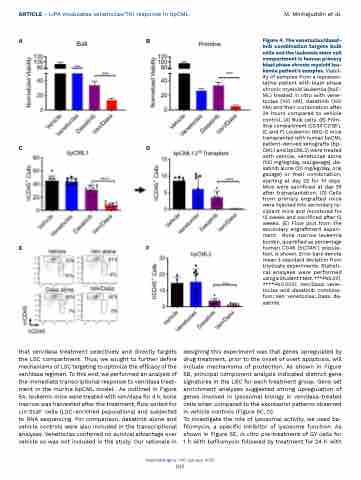
Figure 4. The venetoclax/dasat- inib combination targets bulk cells and the leukemia stem cell compartment in human primary blast phase chronic myeloid leu- kemia patient’s samples. Viabil- ity of samples from a represen- tative patient with blast phase chronic myeloid leukemia (bpC- ML) treated in vitro with vene- toclax (100 nM), dasatinib (100 nM) and their combination after 24 hours compared to vehicle control. (A) Bulk cells. (B) Prim- itive compartment (CD34+CD38+). (C and F) Leukemic NSG-S mice transplanted with human bpCML patient-derived xenografts (bp- CML1 and bpCML2) were treated with vehicle, venetoclax alone (100 mg/kg/day, oral gavage), da- satinib alone (20 mg/kg/day, oral gavage) or their combination, starting at day 25 for 10 days. Mice were sacrificed at day 35 after transplantation. (D) Cells from primary engrafted mice were injected into secondary re- cipient mice and monitored for 12 weeks and sacrificed after 12 weeks. (E) Flow plot from the secondary engraftment experi- ment. Bone marrow leukemia burden, quantified as percentage human CD45 (hCD45+) popula- tion, is shown. Error bars denote mean ± standard deviation from triplicate experiments. Statisti- cal analyses were performed using a Student t test. ***P≤0.001, ****P≤0.0001. Ven/Dasa: vene- toclax and dasatinib combina- tion; Ven: venetoclax; Dasa: da- satinib.
 CD
EF
that ven/dasa treatment selectively and directly targets the LSC compartment. Thus, we sought to further define mechanisms of LSC targeting to optimize the efficacy of the ven/dasa regimen. To this end, we performed an analysis of the immediate transcriptional response to ven/dasa treat- ment in the murine bpCML model. As outlined in Figure 5A, leukemic mice were treated with ven/dasa for 4 h, bone marrow was harvested after the treatment, flow sorted for Lin–Sca1+ cells (LSC-enriched populations) and subjected to RNA sequencing. For comparison, dasatinib alone and vehicle controls were also included in the transcriptional analyses. Venetoclax conferred no survival advantage over vehicle so was not included in the study. Our rationale in
designing this experiment was that genes upregulated by drug treatment, prior to the onset of overt apoptosis, will include mechanisms of protection. As shown in Figure 5B, principal component analysis indicated distinct gene signatures in the LSC for each treatment group. Gene set enrichment analyses suggested strong upregulation of genes involved in lysosomal biology in ven/dasa-treated cells when compared to the expression patterns observed in vehicle controls (Figure 5C, D).
To investigate the role of lysosomal activity, we used ba- filomycin, a specific inhibitor of lysosome function. As shown in Figure 5E, in vitro pre-treatment of GY cells for 1 h with bafilomycin followed by treatment for 24 h with
Haematologica | 110 January 2025
109


