


Page 90 - 2021_06-Haematologica-web
P. 90
M.-E.M. Percival et al.
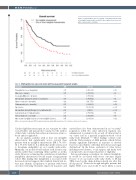
Figure 1. Kaplan-Meier plot for survival comparing patients with no ineligible characteristic (n=220) to those with one or more inel- igible characteristics (n=144).
Table 4. Multivariable Cox regression model with time-dependent transplant variable. Covariate HR
Transplant (ref = no transplant) 0.67
Male (ref = female) 1.15
Secondary AML (ref = de novo) 1
Intermediate cytogenetic risk (ref = favorable) 1.97
Adverse risk (ref = favorable) 3.29
Unknown risk (ref = favorable) 2.97
Age (years) 1.02
Intermediate intensity therapy (ref = high intensity) 2.08
Low intensity (ref = high intensity) 1.09
Not on study (ref = on study) 1.13
One or more ineligible factors (ref = no ineligible factors) 1.45
95%CI P
(0.49, 0.93)
(0.87, 1.15) (0.75, 1.32) (0.86, 4.52) (1.4, 7.73) (0.99, 8.95) (1.01, 1.04) (1.44, 3) (0.77, 1.54) (0.86, 1.49)
(1.08, 1.93)
0.016
0.33 1 0.11 0.0063 0.052 <0.001 <0.001 0.63 0.37 0.012
AML: acute myeloid leukemia; TRM: treatment-related mortality; HR: hazard ratio; CI: Confidence Interval; ref: reference.
Cardiac eligibility criteria may act as a surrogate for other co-morbidities and may predict toxicity, but the authors of that study conclude that exclusion criteria are often too broad and not applicable.
In our analysis, patients with at least one ineligible characteristic had significantly worse survival than patients with no ineligible characteristic (HR 1.79, 95% CI: 1.37-2.33; Table 4). It is likely that all the criteria used to determine ineligibility are not equally unfavorable. Optimally, our models would analyze each criterion sep- arately, rather than combining them together as in this study. However, estimating the contribution of individual ineligibility characteristics would require a larger patient cohort. Our finding that ineligibility is associated with decreased survival suggests that standard clinical trial cri- teria may identify a population of patients with better outcomes following treatment; improved responses and
survival have also been demonstrated in an “on study” population when the same induction regimen was administered to patients both on and off clinical trial at our center and in a national population-based cohort study from Denmark.17,18 These findings contrast some with the Statler analysis of AML patients, which did not identify significant differences in response or survival based on comorbidities other than liver disease and organ dysfunction.6 In the future, evaluation of other factors including travel distance, social support, and frailty level could provide a more nuanced picture of eligibility.
Before performing our analysis, we believed ineligibili- ty would be associated with worse outcomes largely because of its association with early death, or 28-day TRM, based on the sharp decline in death rate after this 28-day period.8 However, though ineligible patients had higher TRM scores and would be more likely to incur
2118
haematologica | 2021; 106(8)


