


Page 27 - 2021_06-Haematologica-web
P. 27
CAR T cell therapies in multiple myeloma
tions have been incorporated in the manuscript after at least three rounds of discussion resulting in the final unan- imously approved version.
Target antigens
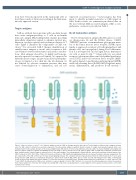
CAR are artificial fusion proteins with a modular design that confer antigen-specificity to T cells in an human leukocyte antigen (HLA)-independent manner providing intracellular stimulatory signals to enhance survival, pro- liferation, cytolytic capacity and cytokine production of T cells.4 Figure 1 illustrates the components of CAR con- structs.5-8 For successful CAR-T therapy, identification of suitable tumor antigens is crucial, since it requires a deli- cate balance between effectiveness and safety considera- tions. Ideal antigens should be: (i) highly and homoge- neously expressed on tumor cell surface, (ii) expressed at different disease stages, (iii) pivotal in disease pathophys- iology, (iv) limited or not shed into the bloodstream, (v) not affected by selective treatment pressure that may cause down-regulation or elimination, and (vi) not
expressed on normal tissues.9-10 Great progress has been made to identify potential molecules as CAR targets in MM. In this section, we summarize pre-clinical data on the most relevant MM-associated antigens, while a com- prehensive overview is provided in Table 1.
B-cell maturation antigen
The B-cell maturation antigen (BCMA) gene is located on chromosome 16 and the BCMA (aliases: CD269, TNFRSF17) protein, a transmembrane glycoprotein mem- ber of the tumor necrosis factor receptor (TNFR) super- family, is expressed on subsets of B cells (plasmablasts and plasma cells) and up-regulated during B-cell differentia- tion. It is not expressed on solid organ tissues, hematopoi- etic cells or naïve B cells.11-12 Along with two associated receptors (calcium modulator and cyclophilin ligand inter- actor [TACI] and B-cell activation factor receptor [BAFF- R]) and its ligands (a proliferation inducing ligand [APRIL] and B-cell activating factor [BAFF]) BMCA regulates matu- ration, differentiation, and promotes B-cell survival.13-15
Figure 1. Chimeric antigen receptor T cells. Chimeric antigen receptors (CAR) are designer proteins that redirect T cells towards a defined surface antigen on tumor cells. The CAR construct contains four essential components. The extracellular antigen recognition domain consists of a single chain variable fragment (scFv) com- monly derived from the variable domains of the heavy and light chains (VH and VL) of monoclonal antibodies joined by a linker to provide flexibility and solubility and therefore improve antigen recognition and binding capacity. The hinge or spacer moiety based on Ig- (IgG1 or IgG4), CD8- or CD28-derived domains, provides flexi- bility, stability and the suitable length for optimal access to the target antigen. The transmembrane domain links the extracellular and intracellular domains of the CAR. It is based on CD3ζ, CD4, CD8α, CD28 or ICOS moieties, influences CAR stability and signaling and may also be involved in immune synapse arrangement. The last components of the CAR construct are the intracellular signaling domains. The activation domain is typically derived from the CD3ζ moiety of the T-cell receptor (first generation CAR), whereas co-stimulatory domains are derived from CD28, 4-1BB, OX40, CD27, or ICOS (second and third generation CAR). Co-stimulation results in intracellular signals that further optimize T-cell function, persistence and proliferation. Through additional genetic modifications, so called “armored” CAR T cells (CAR-T) (fourth generation CAR) secrete cytokines or express ligands to bolster CAR-T function or to overcome the immunosuppressive tumor microenviron- ment. Taken together, the molecular fine-tuning of pre-existing CAR components can greatly improve cellular migration, foster expansion and persistence of the CAR- T and decrease toxicity.
haematologica | 2021; 106(8)
2055


