


Page 250 - 2021_06-Haematologica-web
P. 250
2278
Letters to the Editor
treat population, the median progression-free survival and overall survival were 6·2 months (95% CI: 2.9-13.6) and 15.7 months (95% CI: 6.1-not reached), respectively (Online Supplementary Figure S1A, B). As of January 2, 2019, 13 patients had died of disease progression. Pretreatment serum samples were collected from the whole blood of all patients. The level of soluble CD30 (sCD30) was determined using an enzyme-linked immunosorbent assay. The median value of sCD30 was 99.03 ng/mL (range 2.67-2155.78 ng/mL), and the ORR in the groups with high sCD30 (≥ 99.03 ng/mL) and low sCD30 (<99.03 ng/mL) were not significantly different (46% vs. 50%; P=0.85). In addition, the sCD30 level was not significantly associated with either progression-free survival or overall survival (Online Supplementary Figure S1C, D).
Adverse events were graded according to the National Cancer Institute Common Terminology Criteria for Adverse Events (NCI CTCAE), version 4.03. Treatment- related adverse events are summarized in Online Supplementary Table S2. All patients except for one had adverse events of any grade, among which 45% were considered treatment-related by the investigators. Nine patients (36%) had 15 serious adverse events during the study. The most common treatment-related adverse events were peripheral neuropathy (48%), neutropenia (44%), thrombocytopenia (20%), and rash (16%). The most common treatment-related adverse events of grade 3/4 were neutropenia (20%), thrombocytopenia (12%), and anemia (8%). Overall, the grade 3/4 adverse events were manageable with the standard guidelines and patients recovered completely.
To explore the potential molecular biomarkers and
resistance mechanisms, DNA obtained from formalin- fixed paraffin-embedded tumor tissues was deeply sequenced using a customized multigene panel test com- prising 120 genes. The mutational profiles of 18 tumors in 14 patients are summarized in Figure 2. The samples of tumor tissue were taken pretreatment from ten patients and both before and after treatment with brentuximab vedotin from four patients. A majority of patients (n=8, 57%) carried TET2 mutations and five patients (36%) car- ried RHOA mutations. In addition, DMNT3A and IHD2 mutations were detected in four and three patients, respectively. Among the four patients with genomic pro- files from paired pre- and post-treatment samples, a novel TRAF3D483E mutation (variant allele frequency, 5.2%) was only identified in resistant tumors of patient SNU20. In addition, CARD11V1073M (variant allele fre- quency, 3.18%) mutations were acquired at disease pro- gression in patient SNU13.
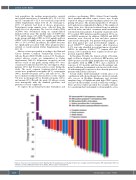
In this phase II study, the clinical activity of brentux- imab vedotin in relapsed or refractory EBV-positive and CD30-positive non-Hodgkin lymphomas was significant and durable with an ORR of 48% and a duration of response of 10.1 months, and thus met the primary end- point. In addition, brentuximab vedotin was well tolerat- ed with manageable toxicities in these heavily pretreated patients with advanced diseases.
Several studies with brentuximab vedotin alone or in combination with chemotherapy have shown its remark- able success in Hodgkin lymphoma and systemic anaplastic large cell lymphoma with high CD30 expres- sion in both the frontline as well as refractory settings.5-8 These previous studies provided the scientific rationale for considering that brentuximab vedotin might be active
Figure 1. Response to brentuximab vedotin. Waterfall plot of maximum percent change in tumor size of target lesions from baseline. NK: natural killer; NOS: not otherwise specified; EBV: Epstein-Barr virus; DLBCL: diffuse large B-cell lymphoma.
haematologica | 2021; 106(8)


