


Page 228 - Haematologica Vol. 110 - January 2025
P. 228
LETTER TO THE EDITOR
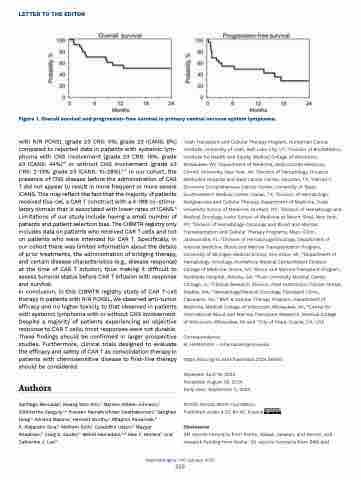
 Figure 1. Overall survival and progression-free survival in primary central nervous system lymphoma.
with R/R PCNSL (grade ≥3 CRS: 0%; grade ≥3 ICANS: 8%) compared to reported data in patients with systemic lym- phoma with CNS involvement (grade ≥3 CRS: 16%; grade ≥3 ICANS: 44%)15 or without CNS involvement (grade ≥3 CRS: 2-13%; grade ≥3 ICANS: 10-28%).5-7 In our cohort, the presence of CNS disease before the administration of CAR T did not appear to result in more frequent or more severe ICANS. This may reflect the fact that the majority of patients received tisa-cel, a CAR T construct with a 4-1BB co-stimu- latory domain that is associated with lower rates of ICANS.6 Limitations of our study include having a small number of patients and patient selection bias. The CIBMTR registry only includes data on patients who received CAR T cells and not on patients who were intended for CAR T. Specifically, in our cohort there was limited information about the details of prior treatments, the administration of bridging therapy, and certain disease characteristics (e.g., disease response) at the time of CAR T infusion, thus making it difficult to assess tumoral status before CAR T infusion with response and survival.
In conclusion, in this CIBMTR registry study of CAR T-cell therapy in patients with R/R PCNSL, we observed anti-tumor efficacy and no higher toxicity to that observed in patients with systemic lymphoma with or without CNS involvement. Despite a majority of patients experiencing an objective response to CAR T cells, most responses were not durable. These findings should be confirmed in larger prospective studies. Furthermore, clinical trials designed to evaluate the efficacy and safety of CAR T as consolidation therapy in patients with chemosensitive disease to first-line therapy should be considered.
Authors
Santiago Mercadal,1 Kwang Woo Ahn,2 Mariam Allbee-Johnson,2 Siddhartha Ganguly,3,4 Praveen Ramakrishnan Geethakumari,5 Sanghee Hong,6 Adriana Malone,7 Hemant Murthy,8 Attaphol Pawarode,9
R. Alejandro Sica,10 Melhem Solh,11 Celalettin Ustun,12 Mazyar Shadman,13 Craig S. Sauter,14 Mehdi Hamadani,15,16 Alex F. Herrera17 and Catherine J. Lee13
1Utah Transplant and Cellular Therapy Program, Huntsman Cancer Institute, University of Utah, Salt Lake City, UT; 2Division of Biostatistics, Institute for Health and Equity, Medical College of Wisconsin, Milwaukee, WI; 3Department of Medicine, Weill Cornell Medicine, Cornell University, New York, NY; 4Section of Hematology, Houston Methodist Hospital and Neal Cancer Center, Houston, TX; 5Harold C. Simmons Comprehensive Cancer Center, University of Texas Southwestern Medical Center, Dallas, TX; 6Division of Hematologic Malignancies and Cellular Therapy, Department of Medicine, Duke University School of Medicine, Durham, NC; 7Division of Hematology and Medical Oncology, Icahn School of Medicine at Mount Sinai, New York, NY; 8Division of Hematology-Oncology and Blood and Marrow Transplantation and Cellular Therapy Programs, Mayo Clinic, Jacksonville, FL; 9Division of Hematology/Oncology, Department of Internal Medicine, Blood and Marrow Transplantation Program, University of Michigan Medical School, Ann Arbor, MI; 10Department of Hematology-Oncology, Montefiore Medical Center/Albert Einstein College of Medicine, Bronx, NY; 11Blood and Marrow Transplant Program, Northside Hospital, Atlanta, GA; 12Rush University Medical Center, Chicago, IL; 13Clinical Research Division, Fred Hutchinson Cancer Center, Seattle, WA; 14Hematology/Medical Oncology, Cleveland Clinic, Cleveland, OH; 15BMT & Cellular Therapy Program, Department of Medicine, Medical College of Wisconsin, Milwaukee, WI; 16Center for International Blood and Marrow Transplant Research, Medical College of Wisconsin, Milwaukee, WI and 17City of Hope, Duarte, CA, USA
Correspondence:
M. HAMADANI - mhamadani@mcw.edu
https://doi.org/10.3324/haematol.2024.285613
Received: April 19, 2024. Accepted: August 28, 2024. Early view: September 5, 2024.
©2025 Ferrata Storti Foundation Published under a CC BY-NC license
Disclosures
SM reports honoraria from Roche, Gilead, Janssen, and Servier, and research funding from Roche. SG reports honoraria from BMS and
  Haematologica | 110 January 2025
220


