


Page 22 - Haematologica Vol. 110 - January 2025
P. 22
EDITORIAL M. Quijada-Álamo et al.
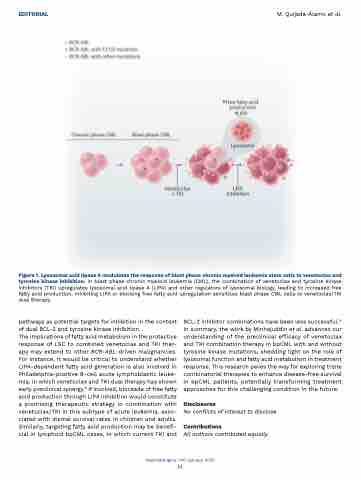
 Figure 1. Lysosomal acid lipase A modulates the response of blast phase chronic myeloid leukemia stem cells to venetoclax and tyrosine kinase inhibition. In blast phase chronic myeloid leukemia (CML), the combination of venetoclax and tyrosine kinase inhibitors (TKI) upregulates lysosomal acid lipase A (LIPA) and other regulators of lysosomal biology, leading to increased free fatty acid production. Inhibiting LIPA or blocking free fatty acid upregulation sensitizes blast phase CML cells to venetoclax/TKI dual therapy.
pathways as potential targets for inhibition in the context of dual BCL-2 and tyrosine kinase inhibition.
The implications of fatty acid metabolism in the protective response of LSC to combined venetoclax and TKI ther- apy may extend to other BCR-ABL-driven malignancies. For instance, it would be critical to understand whether LIPA-dependent fatty acid generation is also involved in Philadelphia-positive B-cell acute lymphoblastic leuke- mia, in which venetoclax and TKI dual therapy has shown early preclinical synergy.9 If involved, blockade of free fatty acid production through LIPA inhibition would constitute a promising therapeutic strategy in combination with venetoclax/TKI in this subtype of acute leukemia, asso- ciated with dismal survival rates in children and adults. Similarly, targeting fatty acid production may be benefi- cial in lymphoid bpCML cases, in which current TKI and
BCL-2 inhibitor combinations have been less successful.10 In summary, the work by Minhajuddin et al. advances our understanding of the preclinical efficacy of venetoclax and TKI combination therapy in bpCML with and without tyrosine kinase mutations, shedding light on the role of lysosomal function and fatty acid metabolism in treatment response. This research paves the way for exploring triple combinatorial therapies to enhance disease-free survival in bpCML patients, potentially transforming treatment approaches for this challenging condition in the future.
Disclosures
No conflicts of interest to disclose.
Contributions
All authors contributed equally.
Haematologica | 110 January 2025
14


