


Page 212 - Haematologica Vol. 110 - January 2025
P. 212
LETTER TO THE EDITOR
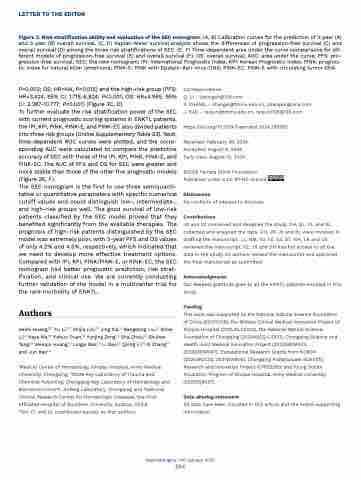
Figure 3. Risk stratification ability and evaluation of the SEC nomogram. (A, B) Calibration curves for the prediction of 3-year (A) and 5-year (B) overall survival. (C, D) Kaplan-Meier survival analysis shows the differences of progression-free survival (C) and overall survival (D) among the three risk stratifications of SEC. (E, F) Time-dependent area under the curve comparisons for dif- ferent models of progression-free survival (E) and overall survival (F). OS: overall survival; AUC: area under the curve; PFS: pro- gression-free survival; SEC: the new nomogram; IPI: International Prognostic Index; KPI: Korean Prognostic Index; PINK: prognos- tic index for natural killer lymphoma; PINK-E: PINK with Epstein-Barr virus-DNA; PINK-EC: PINK-E with circulating tumor DNA.
P=0.003; OS: HR=NA, P=0.015) and the high-risk group (PFS: HR=3.424, 95% CI: 1.718-6.824; P<0.001; OS: HR=4.965, 95% CI: 2.287-10.777; P<0.001) (Figure 3C, D).
To further evaluate the risk stratification power of the SEC with current prognostic scoring systems in ENKTL patients, the IPI, KPI, PINK, PINK-E, and PINK-EC also divided patients into three risk groups (Online Supplementary Table S3). Next, time-dependent ROC curves were plotted, and the corre- sponding AUC were calculated to compare the predictive accuracy of SEC with those of the IPI, KPI, PINK, PINK-E, and PINK-EC. The AUC of PFS and OS for SEC were greater and more stable than those of the other five prognostic models (Figure 3E, F).
The SEC nomogram is the first to use three semiquanti- tative or quantitative parameters with specific numerical cutoff values and could distinguish low-, intermediate-, and high-risk groups well. The good survival of low-risk patients classified by the SEC model proved that they benefited significantly from the available therapies. The prognosis of high-risk patients distinguished by the SEC model was extremely poor, with 3-year PFS and OS values of only 4.2% and 4.5%, respectively, which indicated that we need to develop more effective treatment options. Compared with IPI, KPI, PINK/PINK-E, or PINK-EC, the SEC nomogram had better prognostic prediction, risk strat- ification, and clinical use. We are currently conducting further validation of the model in a multicenter trial for the rare morbidity of ENKTL.
Authors
Dezhi Huang,1,2* Fu Li,1,2* Shijia Lin,1,2* Jing Xia,1,2 Bangdong Liu,1,2 Xinlei Li,1,2 Naya Ma,1,2 Yishuo Duan,1,2 Yunjing Zeng,1,2 Sha Zhou,1,2 Shuhan Tang,1,2 Wenqiu Huang,1,2 Lingyi Rao,1,2 Li Gao,1,2 Qiong Li,1,2 Xi Zhang1-3 and Jun Rao1-3
1Medical Center of Hematology, Xinqiao Hospital, Army Medical University, Chongqing; 2State Key Laboratory of Trauma and Chemical Poisoning, Chongqing Key Laboratory of Hematology and Microenvironment, Jinfeng Laboratory, Chongqing and 3National Clinical Research Center for Hematologic Diseases, the First Affiliated Hospital of Soochow University, Suzhou, China
*DH, FL and SL contributed equally as first authors.
Correspondence:
Q. LI - liqiongsh@126.com
X. ZHANG, - zhangxi@tmmu.edu.cn, zhangxxi@sina.com J. RAO - raojun@tmmu.edu.cn, raojun1129@126.com
https://doi.org/10.3324/haematol.2024.285362
Received: February 26, 2024. Accepted: August 9, 2024. Early view: August 15, 2024.
©2025 Ferrata Storti Foundation Published under a CC BY-NC license
Disclosures
No conflicts of interest to disclose.
Contributions
JR and XZ conceived and designed the study. DH, QL, FL and SL collected and analyzed the data. DH, JR, JX and BL were involved in drafting the manuscript. LL, NM, YD, YZ, SZ, ST, WH, LR and LG reviewed the manuscript. XZ, JR and DH had full access to all the data in the study. All authors revised the manuscript and approved the final manuscript as submitted.
Acknowledgments
Our deepest gratitude goes to all the ENKTL patients enrolled in this study.
Funding
This work was supported by the National Natural Science Foundation of China (82070208), the Military Clinical Medical Innovation Project of Xinqiao Hospital (2021JSLC0003), the National Natural Science Foundation of Chongqing (2024NSCQ-LZX01), Chongqing Science and Health Joint Medical Innovation Project (2022DBXM003, 2023QNXM047), Translational Research Grants from NCRCH (2020ZKZC02, 2021WWB05), Chongqing Postgraduate Scientific Research and Innovation Project (CYB22280) and Young Doctor Incubation Program of Xinqiao Hospital, Army Medical University (2023YQB037).
Data-sharing statement
All data have been included in this article and the online supporting information.
  Haematologica | 110 January 2025
204


