


Page 302 - Haematologica Vol. 109 - July 2024
P. 302
LETTER TO THE EDITOR
Selection of dormant cells during treatment of T-lineage lymphoblastic leukemia and CREB as a therapeutic target
The slower clearance of acute lymphoblastic leukemia (ALL) cells during induction therapy is associated with an increased risk of relapse. Insight into the mechanism(s) of the multidrug resistance, which these cells clearly dis- play, may lead to more specific, minimal residual disease (MRD)-directed therapies. We have recently reported on the use of single-cell, high dimensional mass cytometry to functionally characterize B-lineage ALL cells in both drug-naïve cells at disease presentation and in those persisting during induction.1 The large panel of more than 30 antibodies allowed for the discrimination of leukemia cells from normal cells, based on the identification of a leukemia-associated immunophenotype (LAIP), and provid- ed information on cell cycle, apoptosis and the activation state of key signaling pathways, known to be recurrently activated in ALL. We demonstrated the presence of a strongly activated CREB pathway across a broad spectrum of cytogenetic groups and, using high dimensional anal-
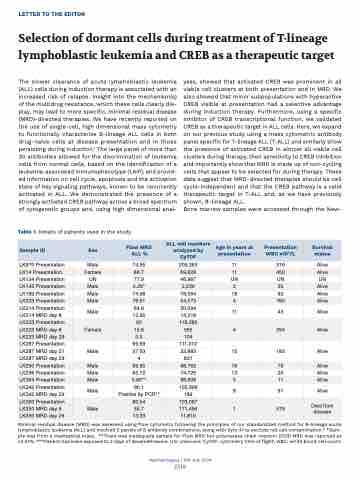
Table 1. Details of patients used in the study.
yses, showed that activated CREB was prominent in all viable cell clusters at both presentation and in MRD. We also showed that minor subpopulations with hyperactive CREB visible at presentation had a selective advantage during induction therapy. Furthermore, using a specific inhibitor of CREB transcriptional function, we validated CREB as a therapeutic target in ALL cells. Here, we expand on our previous study using a mass cytometric antibody panel specific for T-lineage ALL (T-ALL) and similarly show the presence of activated CREB in almost all viable cell clusters during therapy, their sensitivity to CREB inhibition and importantly show that MRD is made up of non-cycling cells that appear to be selected for during therapy. These data suggest that MRD-directed therapies should be cell cycle-independent and that the CREB pathway is a valid therapeutic target in T-ALL and, as we have previously shown, B-lineage ALL.
Bone marrow samples were accessed through the New-
 Sample ID
 Sex
 Flow MRD ALL %
 ALL cell numbers analyzed by CyTOF
 Age in years at presentation
 Presentation WBC x109/L
 Survival status
LK970 Presentation
 Male
 74.95
 209,263
 11
 316
 Alive
 LK14 Presentation
  Female
  86.7
  69,828
  11
  450
  Alive
  LK134 Presentation
UN
77.9
46,967
UN
UN
UN
LK145 Presentation
 Male
 2.26*
 2,239
 2
 50
 Alive
 LK189 Presentation
 Male
 74.98
 78,564
 18
 92
 Alive
 LK203 Presentation
  Male
  76.81
  54,573
  4
  760
  Alive
  LK214 Presentation
Male
 64.9
50,094
11
 43
 Alive
 LK214 MRD day 8
  12.95
  14,318
  LK223 Presentation
Female
90
118,289
4
294
Alive
LK223 MRD day 8
 15.6
 565
 LK223 MRD day 29
  0.3
  104
  LK287 Presentation
 Male
69.69
111,012
 15
 183
 Alive
LK287 MRD day 21
 37.03
 22,883
 LK287 MRD day 29
  4
  821
  LK290 Presentation
Male
 89.95
68,762
16
 76
 Alive
 LK296 Presentation
  Male
  95.72
  74,729
  13
  20
  Alive
  LK304 Presentation
Male
 5.60**
98,906
5
 11
 Alive
 LK342 Presentation
  Male
 80.1
  105,999
  8
 91
 Alive
 LK342 MRD day 29
Positive by PCR**
189
LK350 Presentation
  Male
 80.54
  103,067
  1
 578
 Died from disease
 LK350 MRD day 8
56.7
171,494
LK350 MRD day 29
  13.33
  11,810
     Minimal residual disease (MRD) was assessed using flow cytometry following the principles of our standardized method for B-lineage acute lymphoblastic leukemia (ALL) and involved 5 panels of 6 antibody combinations, along with Syto 41 to exclude red cell contamination.10 *Sam- ple was from a mediastinal mass. **There was inadequate sample for Flow MRD but polymerase chain reaction (PCR) MRD was reported as >0.01%. ***Patient had been exposed to 2 days of dexamethasone. UN: unknown; CyTOF: cytometry time of flight; WBC: white blood cell count.
Haematologica | 109 July 2024
2316


