


Page 231 - 2021_06-Haematologica-web
P. 231
Letters to the Editor
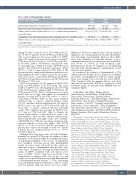
Table 2. Stem cell transplantation outcomes. Patients with transplantation
Patients with hematopoietic reconstitution, n (%)
Platelet recovery (achieving sustained platelets >20,000 cells/mm3 without transfusion), n (%)
D-VTd N=489
488 (99.8)
413 (84.5)
VTd N=484
482 (99.6)
361 (74.6)
P
0.6227a
0.0001a
Number of days to achieve sustained platelets >20,000 cells/mm3 without transfusion, 14.9 [5.38] (2–56) 13.6 [4.64] (1–47) 0.0004b mean [SD] (range)
Neutrophil recovery (achieving sustained absolute neutrophil counts >500 cells/mm3), n (%) 475 (97.1) 474 (97.9) 0.5363a
Number of days to achieve sustained absolute neutrophil counts >500 cells/mm3, 14.4 [4.07] (6–54) 13.7 [4.20] (4–43) 0.0155b
mean [SD] (range)
D-Vtd: daratumumab/bortezomib/thalidomide/dexamethasone; Vtd: bortezomib/thalidomide/dexamethasone; SD: standard deviation. aP-value calculated from Fisher’s exact test.bP-value calculated from two-sample t-test.
Differences between treatment arms reached statistical significance for several parameters of stem cell mobiliza- tion, harvesting, and transplant. However, these differ- ences were ultimately not clinically relevant, as post- transplant hematopoietic reconstitution was nearly iden- tical (99.8% vs. 99.6%) in both treatment arms. Transplantation should be managed on an individual basis and with clinical judgment considering the overall situation of the patient.
In conclusion, the addition of daratumumab to VTd during induction therapy did not impair the feasibility and safety of transplantation with successful engraft- ment, even though stem cell yield was lower with D- VTd. Combined with the primary efficacy and safety data reported previously, D-VTd is considered a valid treatment option for patients with NDMM who are transplant-eligible.
Cyrille Hulin,1 Fritz Offner,2 Philippe Moreau,3
Murielle Roussel,4 Karim Belhadj,5 Lotfi Benboubker,6
Denis Caillot,7 Thierry Facon,8 Laurent Garderet,9
Frédérique Kuhnowski,10 Anne-Marie Stoppa,11 Brigitte Kolb,12 Mourad Tiab,13 Kon-Siong Jie,14 Matthijs Westerman,15
Jérôme Lambert,16 Lixia Pei,17 Veronique Vanquickelberghe,18 Carla de Boer,19 Jessica Vermeulen,19 Tobias Kampfenkel,19 Pieter Sonneveld,20 and Niels W.C.J. van de Donk21 on behalf of the Intergroupe Francophone du Myélome (IFM) and Dutch- Belgian Cooperative Trial Group for Hematology Oncology (HOVON)
1Department of Hematology, Hôpital Haut-Lévêque, University Hospital Bordeaux, Pessac, France; 2Hematology, University Hospital Ghent, Ghent, Belgium; 3Service d'Hématologie Clinique, University Hospital Hôtel-Dieu, Nantes, France; 4Service d’Hématologie Clinique, /IUC Oncopole, Toulouse, France; 5Hémopathies Lymphoïdes, Hôpital Henri Mondor, Creteil, France; 6CHU de Tours, Hôpital de Bretonneau, Tours, France; 7CHU Dijon, Hôpital Du Bocage, Dijon, France; 8University of Lille, CHU Lille, Service des Maladies du Sang, Lille, France; 9Sorbonne Université, INSERM, UMR_S 938, Centre de Recherche Saint-Antoine, Team Proliferation and Differentiation of Stem Cells, Assistance Publique-Hôpitaux de Paris, Hôpital Pitié Salpetrière, Département d'Hématologie, Paris, France; 10Institut Curie Paris, Paris, France; 11Institut Paoli-Calmettes, Marseille, France; 12CHU de Reims, Hôpital Robert Debré, Reims, France; 13CHD Vendée, La Roche-sur-Yon, France; 14Zuyderland MC, Sittard,
the Netherlands; 15Northwest Clinics, Alkmaar, the Netherlands; 16Biostatistical Department, Hôpital Saint Louis, Paris, France; 17Janssen Research & Development, LLC, Raritan, NJ, USA; 18Janssen Research & Development, Beerse, Belgium; 19Janssen Research & Development, LLC, Leiden, the Netherlands; 20Erasmus University Medical Center Cancer Institute, Rotterdam,
the Netherlands and 21Amsterdam UMC, Vrije Universiteit Amsterdam, Department of Hematology, Amsterdam, the Netherlands
lasting 4-6 days occurred in 5.0% (25 of 504) and 1.2% (six of 490) of patients in the D-VTd and VTd groups who received apheresis. The mean number of CD34+ stem cells collected was lower for patients receiving D- VTd versus VTd (6.7×10⁶/kg vs. 10.0×10⁶/kg, respective- ly; P<0.0001; Table 1). Nevertheless, among those who received apheresis, a similar percentage of D-VTd-treated patients and VTd-treated patients underwent ASCT (97.0% vs. 98.8%, respectively; P=0.0758; Table 1). Of the patients who completed mobilization without receiv- ing transplant, the most common reasons for discontinu- ation were adverse events in the D-VTd group (D-VTd, n=8; VTd, n=2) and disease progression in the VTd group (D-VTd, n=7; VTd, n=4).
ASCT was undergone by 489 patients in the D‒VTd- group and 484 patients in the VTd group. The mean number of CD34+ stem cells transplanted was 3.6×10⁶/kg in the D-VTd group compared with 5.0×10⁶/kg in the VTd group (P<0.0001; Table 1). Hematopoietic reconsti- tution rates were high and similar in transplanted patients receiving D-VTd and VTd (99.8% vs. 99.6%, respectively; P=0.6227; Table 2). The mean (standard deviation) time to achieve sustained platelet counts >20,000 cells/mm3 without transfusion was 14.9 days for D-VTd versus 13.6 days for VTd (P=0.0004), and the mean time to achieve sustained absolute neutrophil counts >500 cells/mm3 was 14.4 days for D-VTd versus 13.7 days for VTd (P=0.0155; Table 2). Despite the greater mean number of days needed to achieve sus- tained platelet counts >20,000 cells/mm3 without trans- fusion and absolute neutrophil counts >500 cells/mm3 with D-VTd versus VTd, the percentage of patients who achieved platelet recovery was higher with D-VTd (84.5% vs. 74.6%; P=0.0001) and the percentages of patients who achieved neutrophil recovery were similar between the two treatment groups (97.1% vs. 97.9%; P=0.5363; Table 2).
Although there was lower stem cell yield and higher plerixafor use in the D-VTd group, the addition of dara- tumumab to VTd did not impair the feasibility and safety of performing transplant or the success of engraftment post transplant. Potential reasons why daratumumab results in lower stem cell yield in this study are unknown; however, daratumumab may possibly cause some degree of interference through an unknown mech- anism, as CD34+ committed stem cells express a low level of CD38.12 Factors that have previously been demonstrated to impact yield, such as age, sex and weight, are not specifically associated with daratumumab or daratumumab-treated patients.13,14 Close monitoring and early implementation of plerixafor could be consid- ered for patients with risk factors for lower yield.15
haematologica | 2021; 106(8)
2259


