


Page 223 - 2021_06-Haematologica-web
P. 223
Letters to the Editor
Rationale for the combination of venetoclax and
ibrutinib in T-prolymphocytic leukemia
T-prolymphocytic leukemia (T-PLL) is an aggressive mature T-cell neoplasm that responds poorly to conven- tional chemotherapy and has a dismal outcome.1 Patients with active T-PLL present with an exponential rise of post-thymic T cells with prolymphocytic morphology, hepatosplenomegaly, skin rash, lymphadenopathy, and effusions.1 T-PLL cells commonly demonstrate rearrange- ments involving T-cell leukemia/lymphoma 1 (TCL1) family genes TCL1A, MTCP1 (mature T-cell prolifera- tion), or TCL1B as molecular hallmarks.2 The anti-CD52 antibody alemtuzumab has improved initial responses up to 90%; however, nearly all cases eventually relapse, and allogeneic stem cell transplantation remains the only cur- ative treatment option for a small subset of patients.3
Recently, we and others have demonstrated in vitro activity and clinical efficacy of the Bcl-2 inhibitor veneto- clax as a single agent in relapsed/refractory T-PLL (r/r-T- PLL).4,5 Since clinical responses were transient, we set out to identify effective combination partners for venetoclax. We probed putative mechanisms and demonstrated clin- ical feasibility and activity of a putative combination by treating two patients with active, r/r-T-PLL.
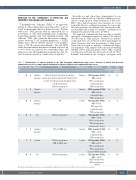
We employed combinatorial drug screening to identify synergistic combination partners to enhance the efficacy of venetoclax in T-PLL patients. Twenty-four candidate compounds were selected based on their clinical approval status, literature data, and mechanisms of drug action. Venetoclax was used in pairwise combinations (Figure 1A) in primary T-PLL samples with a mean post-thawing viability of 93% and mean purity of 94% (Table 1). Drug screening was performed as previously described.4 Here ibrutinib demonstrated the strongest synergism with
Table 1. Characteristics of patients included in the high throughput combinatorial drugs screen. Overview of clinical and molecular characteristics as well as sample quality information for patients included in the combinatorial drug screen.
Patient Sex Age Cytogenetics ID
FISH
TCL1A-expression Consensus Dx
Tumor Post cellcontent thawing
(%) viability (%)
93 89
98 95
>90 95
93 96
98 NA
99 89
90 NA
1
2
3
4
5
6
7
M 73
F 58
M 41
M 76
F 81
F 67
M 64
Complex karyotype
Complex
karyotype
Complex karyotype
NA
Complex karyotype
Normal
NA
44,XY,-18,-22,der(6),t(6;22)(p?;q?),idic(6p?), idic(8)(q11),del(11)(q14),der(12),t(12;22)(q?;q?), der(13), t(13;14)(q?;q?),dup(15)(q22),der(15), t(15;18)(q?;q?)[cp5];
TCL1A rearrangement
NA
NA
TCL1A rearrangement
TP53_del MYB_del
TCL1A rearrangement
ATM_del MYC_amp
TLC1A rearrangement
Negative
Negative
Positive
Negative
Negative
Positive
Positive
TCL1 positive T-PLL:
WBC >5x10⁹/L,
TCL1 rearrangement,
complex karyotype,
TCR rearrangement
TCL1 negative T-PLL:
WBC >5x10⁹/L,
complex karyotype,
TCR-rearrangement
TCL1 positive T-PLL:
WBC >5x10⁹/L,
TCL1 expression,
complex karyotype,
TCR rearrangement
TCL1 positive T-PLL:
WBC > 5x10⁹/L,
TCL1 rearrangement,
TCR rearrangement,
splenomegaly, effusion
TCL1 negative T-PLL:
WBC > 5x10⁹/L,
complex karyotype,
TCR-rearrangement
TCL1 positive T-PLL:
WBC >5x10⁹/L,
TCL1 rearrangement,
TCR rearrangement,
trisomy 8, ATM abnormality
TCL1 positive T-PLL:
WBC > 5x10⁹/L, TCL1 rearrangement,
TCR rearrangement,
effusion
M: male; F: female; FISH: fluorescence in situ hybridization; WBC: white blood cell count; TCR: T-cell receptor; NA: not available.
haematologica | 2021; 106(8)
2251


