


Page 22 - 2021_06-Haematologica-web
P. 22
Y.F. van Lier et al.
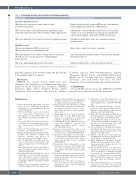
Table 2. Outstanding questions and potential investigational approaches. Key questions
Bacterial composition-focused
Which ‘protective’ taxa from associative studies are truly
beneficial as therapeutics?
What is the best way to collect additional data to support that change
in bacterial composition is indeed the mechanism of clinical improvement?
What is the optimal diet for the patient to produce the optimal microbiome?
Metabolite-focused
Which are most important (SCFA, bile acids etc.)? Where do they need to act for maximum benefit?
Which patient-intrinsic factors influence therapy efficacy (e.g. baseline diversity, presence of specific taxa, level of epithelial damage,
genetic factors)?
What is the optimal timing and interval for intervention?
Potential investigational approach
Transfer defined bacterial consortia in HCT patients + trials with more
invasive sampling especially at time of GvHD diagnosis.
Add important secondary endpoints to initial studies as well as clinical responses (e.g., fecal engraftment of specific taxa, bacterial diversity, active metabolic pathways, serum and fecal SCFA concentrations).
Start with observational diet studies, move toward interventional randomized trials.
Mouse studies + trials of ‘post-biotic’ compounds.
Large (interventional) randomized studies of the microbiome-targeting intervention of interest.
Small interventional studies + trials with long-term follow-up.
HCT: hematopoietic cell transplantation; GvHD: graft-versus-host disease; SCFA: short-chain fatty acids.
ting with regard to how we may target the microbiome for maximal benefit for patients.
Disclosures
MRMvdB has received research support from Seres Therapeutics; has consulted for, received honorarium from or par- ticipated in advisory boards for Seres Therapeutics, WindMIL therapeutics, Rheos, Frazier Healthcare Partners, Nektar Therapeutics, Notch Therapeutics, Forty Seven inc., Priothera,
Ceramedix, Lygenesis, Pluto Immunotherapeutics, Magenta Therapeutics, Merck & Co, Inc., and DKMS Medical Council (Board); has IP Licensing with Seres Therapeutics, Juno Therapeutics, and stock options from Seres and Notch Therapeutics. None of the other authors has anything to disclose.
Contributions
YvL and KAM wrote the manuscript. MRMvdB and MDH provided critical feedback and edited the manuscript.
References
1. Jagasia M, Arora M, Flowers ME, et al. Risk factors for acute GVHD and survival after hematopoietic cell transplantation. Blood. 2012;119(1):296-307.
2. D'Souza A, Fretham C, Lee SJ, et al. Current use of and trends in hematopoietic cell transplantation in the United States. Biol Blood Marrow Transplant. 2020;26(8):e177- e182.
3. Gooptu M, Koreth J. Translational and clin- ical advances in acute graft-versus-host dis- ease. Haematologica. 2020;105(11):2550- 2560.
4. Sonis ST. The pathobiology of mucositis. Nat Rev Cancer. 2004;4(4):277-284.
5. Bennett JE, Dolin R, Blaser MJ, Mandell GL, Douglas RG. Mandell, Douglas, and Bennett's Principles and Practice of Infectious Diseases. 2015. Eighth edition.
6. Zeiser R, Blazar BR. Acute graft-versus-host disease - biologic process, prevention, and therapy. N Engl J Med. 2017;377(22):2167- 2179.
7. Antin JH, Ferrara JL. Cytokine dysregulation and acute graft-versus-host disease. Blood. 1992;80(12):2964-2968.
8. MacMillan ML, Robin M, Harris AC, et al. A refined risk score for acute graft-versus-host disease that predicts response to initial ther- apy, survival, and transplant-related mortal- ity. Biol Blood Marrow Transplant. 2015;21 (4):761-767.
9. Jagasia M, Zeiser R, Arbushites M, Delaite P, Gadbaw B, Bubnoff NV. Ruxolitinib for the
treatment of patients with steroid-refractory GVHD: an introduction to the REACH tri- als. Immunotherapy. 2018;10(5):391-402.
10. Rinninella E, Raoul P, Cintoni M, et al. What is the healthy gut microbiota composition? A changing ecosystem across age, environ- ment, diet, and diseases. Microorganisms. 2019;7(1):14.
11. Amarasinghe SL, Su S, Dong X, Zappia L, Ritchie ME, Gouil Q. Opportunities and challenges in long-read sequencing data analysis. Genome Biol. 2020;21(1):30.
12. Turnbaugh PJ, Ley RE, Hamady M, Fraser- Liggett CM, Knight R, Gordon JI. The human microbiome project. Nature. 2007;449(7164):804-810.
13. Falony G, Joossens M, Vieira-Silva S, et al. Population-level analysis of gut microbiome variation. Science. 2016;352(6285):560-564.
14. Zhernakova A, Kurilshikov A, Bonder MJ, et al. Population-based metagenomics analysis reveals markers for gut microbiome compo- sition and diversity. Science. 2016;352 (6285):565-569.
15. Jackson MA, Verdi S, Maxan ME, et al. Gut microbiota associations with common dis- eases and prescription medications in a pop- ulation-based cohort. Nat Commun. 2018;9 (1):2655.
16. Hooper LV, Macpherson AJ. Immune adap- tations that maintain homeostasis with the intestinal microbiota. Nat Rev Immunol. 2010;10(3):159-169.
17. Kamada N, Seo SU, Chen GY, Nunez G. Role of the gut microbiota in immunity and inflammatory disease. Nat Rev Immunol. 2013;13(5):321-335.
18.Yatsunenko T, Rey FE, Manary MJ, et al. Human gut microbiome viewed across age and geography. Nature. 2012;486(7402):222- 227.
19. Miller TL, Wolin MJ. Pathways of acetate, propionate, and butyrate formation by the human fecal microbial flora. Appl Environ Microbiol. 1996;62(5):1589-1592.
20. Ridlon JM, Kang DJ, Hylemon PB. Bile salt biotransformations by human intestinal bacteria. J Lipid Res. 2006;47(2):241-259.
21. Correa-Oliveira R, Fachi JL, Vieira A, Sato FT, Vinolo MA. Regulation of immune cell function by short-chain fatty acids. Clin Transl Immunology. 2016;5(4):e73.
22. Tan J, McKenzie C, Potamitis M, Thorburn AN, Mackay CR, Macia L. The role of short- chain fatty acids in health and disease. Adv Immunol. 2014;121:91-119.
23. Smith T. A modification of the method for determining the production of indol by bac- teria. J Exp Med. 1897;2(5):543-547.
24. Ridlon JM, Harris SC, Bhowmik S, Kang DJ, Hylemon PB. Consequences of bile salt bio- transformations by intestinal bacteria. Gut Microbes. 2016;7(1):22-39.
25. Sun M, Wu W, Chen L, et al. Microbiota- derived short-chain fatty acids promote Th1 cell IL-10 production to maintain intestinal homeostasis. Nat Commun. 2018;9(1):3555.
26. Dudakov JA, Hanash AM, van den Brink MR. Interleukin-22: immunobiology and pathology. Annu Rev Immunol. 2015;33: 747-785.
27. Taur Y, Xavier JB, Lipuma L, et al. Intestinal domination and the risk of bacteremia in patients undergoing allogeneic hematopoi-
2050
haematologica | 2021; 106(8)


