


Page 239 - Haematologica Vol. 110 - January 2025
P. 239
LETTER TO THE EDITOR
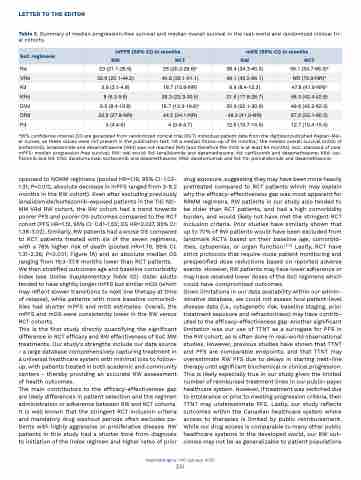
Table 2. Summary of median progression-free survival and median overall survival in the real-world and randomized clinical tri-
al cohorts.
 SoC regimens
 mPFS (95% CI) in months
 mOS (95% CI) in months
 RW
  RCT
  RW
  RCT
  Rd
 23 (21.1-26.9)
 26 (20.2-29.6)a
 38.4 (34.3-40.3)
 59.1 (54.7-66.3)a
 VRd
 32.6 (25.1-44.2)
 40.8 (33.1-51.1)
 48.1 (43.5-66.1)
 NR (79.9-NR)b
 Kd
3.9 (3.1-4.8)
18.7 (15.6-NR)
9.9 (8.4-12.3)
47.8 (41.9-NR)a
 KRd
  8 (6.2-9.6)
  26.3 (23.3-30.5)
  21.6 (17.8-28.7)
  48.3 (42.4-52.8)
 DVd
9.5 (8.4-10.8)
16.7 (13.3-19.6)a
25.9 (22.1-30.9)
49.6 (42.2-62.3)
 DRd
  32.6 (27.8-NR)
  44.5 (34.1-NR)
  48.3 (41.9-NR)
  67.6 (53.1-80.5)
 Pd
 5 (4.4-6)
 4 (3.6-4.7)
 12.6 (10.7-14.5)
 12.7 (10.4-15.5)
   a95% confidence interval (CI) are generated from randomized clinical trial (RCT) individual patient data from the digitized published Kaplan-Mei- er curves, as these values were not present in the publication text. bAt a median follow-up of 84 months,2 the median overall survival (mOS) of bortezomib, lenalidomide and dexamethasone (VRd) was not reached (NR) (and therefore the mOS is at least 84 months). SoC: standard of care; mPFS: median progression-free survival; RW: real world; Rd: lenalidomide and dexamethasone; Kd: carfilzomib and dexamethasone; KRd: car- filzomib and Rd; DVd: daratumumab, bortezomib and dexamethasone; DRd: daratumumab and Rd; Pd: pomalidomide and dexamethasone.
opposed to NDMM regimens (pooled HR=1.16, 95% CI: 1.03- 1.31; P=0.012, absolute decrease in mPFS ranged from 3-8.2 months in the RW cohort). Even after excluding previously lenalidomide/bortezomib-exposed patients in the TIE-ND- MM VRd RW cohort, the RW cohort had a trend towards poorer PFS and poorer OS outcomes compared to the RCT cohort (PFS HR=1.12, 95% CI: 0.81-1.55; OS HR=2.037, 95% CI: 1.38-3.02). Similarly, RW patients had a worse OS compared to RCT patients treated with six of the seven regimens, with a 76% higher risk of death (pooled HR=1.76, 95% CI: 1.31-2.36; P<0.001; Figure 1A) and an absolute median OS ranging from 19.3-37.9 months lower than RCT patients. We then stratified outcomes age and baseline comorbidity index (see Online Supplementary Table S2). Older adults tended to have slightly longer mPFS but similar mOS (which may reflect slower transitions to next line therapy at time of relapse), while patients with more baseline comorbid- ities had shorter mPFS and mOS estimates. Overall, the mPFS and mOS were consistently lower in the RW versus RCT cohorts.
This is the first study directly quantifying the significant difference in RCT efficacy and RW effectiveness of SoC MM treatments. Our study’s strengths include our data source - a large database comprehensively capturing treatment in a universal healthcare system with minimal loss to follow- up, with patients treated in both academic and community centers - thereby providing an accurate RW assessment of health outcomes.
The main contributors to the efficacy-effectiveness gap are likely differences in patient selection and the regimen administration or adherence between RW and RCT cohorts. It is well known that the stringent RCT inclusion criteria and mandatory drug washout periods often excludes pa- tients with highly aggressive or proliferative disease. RW patients in this study had a shorter time from diagnosis to initiation of the index regimen and higher rates of prior
drug exposure, suggesting they may have been more heavily pretreated compared to RCT patients which may explain why the efficacy-effectiveness gap was most apparent for RRMM regimens. RW patients in our study also tended to be older than RCT patients, and had a high comorbidity burden, and would likely not have met the stringent RCT inclusion criteria. Prior studies have similarly shown that up to 70% of RW patients would have been excluded from landmark RCT’s based on their baseline age, comorbid- ities, cytopenias, or organ function.13-15 Lastly, RCT have strict protocols that require close patient monitoring and prespecified dose reductions based on reported adverse events. However, RW patients may have lower adherence or may have received lower doses of the SoC regimens which could have compromised outcomes.
Given limitations in our data availability within our admin- istrative database, we could not assess how patient-level disease data (i.e., cytogenetic risk, baseline staging, prior treatment exposure and refractoriness) may have contrib- uted to the efficacy-effectiveness gap. Another significant limitation was our use of TTNT as a surrogate for PFS in the RW cohort, as is often done in real-world observational studies. However, previous studies have shown that TTNT and PFS are comparable endpoints, and that TTNT may overestimate RW PFS due to delays in starting next-line therapy until significant biochemical or clinical progression. This is likely especially true in our study given the limited number of reimbursed treatment lines in our public-payer healthcare system. However, if treatment was switched due to intolerance or prior to meeting progression criteria, then TTNT may underestimate PFS. Lastly, our study reflects outcomes within the Canadian healthcare system where access to therapies is limited by public reimbursement. While our drug access is comparable to many other public healthcare systems in the developed world, our RW out- comes may not be as generalizable to patient populations
Haematologica | 110 January 2025
231


