


Page 153 - Haematologica Vol. 110 - January 2025
P. 153
ARTICLE - R-GemOx+Atezo in R/R transformed DLBCL
T. Othman et al.
small lymphocytic lymphoma, 3 marginal zone lymphoma, 1 lymphoplasmacytic lymphoma). The median number of prior lines of treatment was 2 (range, 1-7), and two pa- tients had received prior CAR T-cell therapy, one patient had previously received a CD20-CD3 bispecific antibody (mosunetuzumab), and one patient underwent autologous HSCT prior to enrollment.
Safety
During the safety lead-in, eight patients were enrolled. Two patients were replaced because of progressive disease prior to completing the DLT evaluation period but were included in the response rate calculations. One of six patients eval- uable for DLT had a DLT attributed to atezolizumab during the safety lead-in, a grade 4 Stevens-Johnson syndrome followed by infectious complications, eventually leading to asystole and death. The maximum tolerated dose/RP2D was dose level 1. The most common adverse events of any grade were fatigue (N=15), raised levels of transaminases (N=14), thrombocytopenia (N=13), nausea/vomiting (N=12), and hypertension (N=10) (Table 2). The most common grade ≥3 events were neutropenia (N=5, 18.5%), lymphopenia
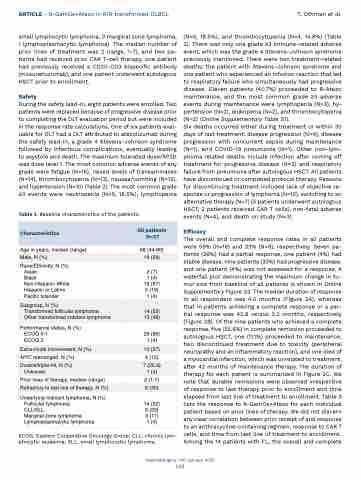
Table 1. Baseline characteristics of the patients.
(N=5, 18.5%), and thrombocytopenia (N=4, 14.8%) (Table 2). There was only one grade ≥3 immune-related adverse event, which was the grade 4 Stevens-Johnson syndrome previously mentioned. There were two treatment-related deaths: the patient with Stevens-Johnson syndrome and one patient who experienced an infusion reaction that led to respiratory failure who simultaneously had progressive disease. Eleven patients (40.7%) proceeded to R-Atezo maintenance, and the most common grade ≥3 adverse events during maintenance were lymphopenia (N=3), hy- pertension (N=2), leukopenia (N=2), and thrombocytopenia (N=2) (Online Supplementary Table S1).
Six deaths occurred either during treatment or within 30 days of last treatment: disease progression (N=4), disease progression with concurrent sepsis during maintenance (N=1), and COVID-19 pneumonia (N=1). Other non-lym- phoma related deaths include infection after coming off treatment for progressive disease (N=2) and respiratory failure from pneumonia after autologous HSCT. All patients have discontinued or completed protocol therapy. Reasons for discontinuing treatment included lack of objective re- sponse or progression of lymphoma (N=12), switching to an alternative therapy (N=7) (5 patients underwent autologous HSCT, 2 patients received CAR T cells), non-fatal adverse events (N=4), and death on study (N=3).
Efficacy
The overall and complete response rates in all patients were 59% (N=16) and 33% (N=9), respectively. Seven pa- tients (26%) had a partial response, one patient (4%) had stable disease, nine patients (33%) had progressive disease, and one patient (4%) was not assessed for a response. A waterfall plot demonstrating the maximum change in tu- mor size from baseline of all patients is shown in Online Supplementary Figure S2. The median duration of response in all responders was 4.0 months (Figure 2A), whereas that in patients achieving a complete response or a par- tial response was 42.6 versus 3.0 months, respectively (Figure 2B). Of the nine patients who achieved a complete response, five (55.6%) in complete remission proceeded to autologous HSCT, one (11.1%) proceeded to maintenance, two discontinued treatment due to toxicity (peripheral neuropathy and an inflammatory reaction), and one died of a myocardial infarction, which was unrelated to treatment, after 42 months of maintenance therapy. The duration of therapy for each patient is summarized in Figure 2C. We note that durable remissions were observed irrespective of response to last therapy prior to enrollment and time elapsed from last line of treatment to enrollment. Table 3 lists the response to R-GemOx+Atezo for each individual patient based on prior lines of therapy. We did not discern any clear correlation between prior receipt of and response to an anthracycline-containing regimen, response to CAR T cells, and time from last line of treatment to enrollment. Among the 14 patients with FL, the overall and complete
 Characteristics
 All patients N=27
Age in years, median (range)
  68 (44-80)
  Male, N (%)
 16 (59)
 Race/Ethnicity, N (%) Asian
Black
Non-Hispanic White Hispanic or Latino Pacific Islander
   2 (7)
1 (4) 18 (67) 5 (19) 1 (4)
 Subgroup, N (%)
Transformed follicular lymphoma Other transformed indolent lymphoma
 14 (52) 13 (48)
 Performance status, N (%) ECOG 0-1
ECOG 2
 26 (96) 1 (4)
Extra-nodal involvement, N (%)
  10 (37)
  MYC rearranged, N (%)
 4 (15)
 Double/triple-hit, N (%) Unknown
7 (25.9) 1 (4)
Prior lines of therapy, median (range)
 2 (1-7)
 Refractory to last line of therapy, N (%)
  8 (30)
   Underlying Indolent lymphoma, N (%) Follicular lymphoma
CLL/SLL
Marginal zone lymphoma Lymphoplasmacytic lymphoma
   14 (52) 9 (33) 3 (11) 1 (4)
   ECOG: Eastern Cooperative Oncology Group; CLL: chronic lym- phocytic leukemia; SLL: small lymphocytic lymphoma.
Haematologica | 110 January 2025
145


